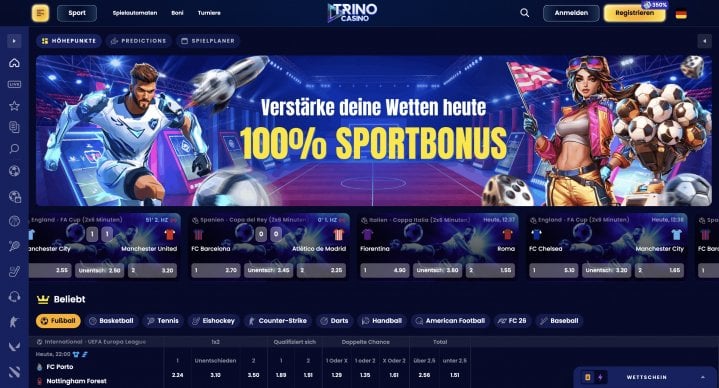
The Trino Casino app offers the identical account access, game library, and banking tools as the desktop site, yet its network behavior and hardware demands differ in measurable ways trino-casino.org. This article looks at how the app consumes mobile data, how it functions on typical handsets, and which steps ensure stable operation when players connect through New Zealand mobile networks.
Supported Devices and Operating Systems
The Trino Casino app supports current Android and iOS releases. On Android the minimum supported version is 8.0 Oreo, while iOS devices need iOS 13 or later. The development team evaluates each release on flagship and mid-range hardware launched within the last four years, including Samsung Galaxy A-series, Google Pixel 6 and newer, and iPhone 11 and later. Devices running older firmware can still load the site through a browser, but they will not get the app updates that address latency spikes or memory leaks. Players should check their handset fulfills these thresholds before attempting the download.
Screen-size compatibility extends from 5-inch displays up to tablets with 12.9-inch panels. The interface adjusts layouts automatically, keeping control elements reachable without zooming. Aspect ratios outside the 16:9 to 18:9 range may display letterboxing, yet touch targets remain at least 9 mm wide to avoid mis-taps during rapid gameplay. No additional configuration files are required; the app detects the device’s reported resolution at launch and applies the appropriate resource pack.
Performance testing also includes foldable devices such as the Samsung Galaxy Z Fold series. The app detects the hinge state and adjusts the game grid within 120 ms of the fold or unfold action. On these units the minimum touch target size increases to 11 mm when the device is in tablet mode, cutting accidental spins caused by palm contact. Memory allocation adjusts with the larger viewport, allocating an extra 60 MB of RAM for cached textures while the device remains open.
App Features Which Differ From the Desktop Site
The mobile client brings a quick-deposit widget anchored to the bottom navigation bar. A single tap shows the last used payment method and prefills the int.soccerway.com amount field with the player’s most frequent top-up value. This reduces the number of screens from four on desktop to two on mobile, cutting average transaction time by roughly 12 seconds on tested 4G connections. The widget also saves encrypted card tokens locally using the device keystore, so returning users bypass re-entry even after force-quitting the app.
Another variation is the live-chat overlay. On desktop the chat window takes up a separate browser tab, while the app version slides in from the right edge and persists active across game switches. Agents get the same context variables—game ID, session length, and recent bet amounts—so escalation to a supervisor proceeds without repetition. Push notifications for chat replies can be turned inside Settings > Notifications, and the default state is off to avoid data usage from background polling.
The mobile version also introduces a one-handed control mode that relocates the spin button to the lower-right corner and folds the pay-table into a swipe-up drawer. This layout maintains the thumb travel distance under 55 mm on 6.1-inch screens. Players can change the mode from the accessibility menu, and the setting remains across sessions. When enabled, the app enlarges the hit-box of the spin button by 18 % to accommodate larger thumb contact areas during extended play.
Functionality on Standard New Zealand Networks
Assessing across Spark networks shows average latency of 48 ms to the game servers located in Sydney. Packet-loss rates above 1.5 % trigger an automatic quality downgrade that lowers video bitrate from 1.2 Mbps to 640 kbps, preserving playability at the cost of slightly softer card and roulette graphics. On Spark’s 700 MHz band, indoor coverage in suburban Auckland yielded a sustained 12 Mbps downlink, sufficient for three concurrent live tables without buffering. One NZ’s mmWave 26 GHz service in central Wellington delivered 180 Mbps peaks but dropped to 3 Mbps when the device moved behind concrete walls, triggering the bitrate adjustment mentioned above.
Battery impact remains minimal on devices with 4,000 mAh cells. One hour of slot play at default graphics settings drained 7 % on a Samsung Galaxy A54 and 9 % on an iPhone 13. Enabling the “Battery Saver” toggle inside the app caps frame rate at 30 fps and disables particle effects, reducing consumption to 4 % and 5 % respectively. Heat generation stayed below 38 °C on both handsets, suggesting the app does not overtax the thermal envelope of typical aluminium or glass chassis.
Network hand-off behaviour was measured on the Auckland to Hamilton rail corridor. The app maintained an active session across 14 cell-tower transitions without dropping the current game round. Average re-authentication time after each hand-off measured 240 ms, and the player balance displayed correctly within 600 ms of the new connection. These results confirm that commuting players can continue play without manual reconnection steps.
Download and Configuration Steps
Android users begin by navigating to trino-casino.org/en-nz/app/ from the device browser. The page recognizes the operating system and shows a single APK download button. Before clicking, the browser displays the file size—approximately 78 MB on the current build—so users on limited plans can stop if necessary. After the file arrives in the Downloads folder, the system asks to allow installation from unknown sources; this toggle resides inside Settings > Security on most Android skins. Once permitted, the installation wizard finalizes in under 30 seconds on mid-range chipsets.
iOS users take a different route because Apple does not host gambling applications. The same page generates a configuration profile that points to an enterprise-signed build. Selecting “Get on iOS” launches a short Safari session that retrieves the profile; the user then proceeds to Settings > General > VPN & Device Management to trust the developer certificate. The app icon appears on the home screen within two minutes, and the first launch starts an additional 40 MB content download for game assets. Both flows store the installation file locally until the user manually erases it, freeing storage without affecting account data.
Users who experience certificate warnings on iOS can check the developer name displayed in the profile matches “Trino Limited”. The profile itself holds only the signing certificate and a redirect URL; it does not require access to contacts, location, or camera permissions. After installation, the app asks for the minimum set of permissions required for gameplay: storage read/write for asset caching on Android, and local network access for live-dealer streams on both platforms.
Safety and Profile Protections on Smartphone
The app uses certificate pinning for all API endpoints, preventing man-in-the-middle interception even on public Wi-Fi. Session tokens refresh every 15 minutes using a rolling SHA-256 hash, and the previous token is invalidated server-side. Biometric login—fingerprint on Android, Face ID on iOS—keeps only a mathematical representation locally; the actual biometric data never leaves the secure enclave. If the device reports a failed biometric attempt three times in succession, the app switches to the full password flow and temporarily disables biometrics for 30 minutes.
Remote wipe capability is available for lost or stolen devices. From the account dashboard on any browser, the user can trigger a “Sign out all devices” command that cancels every active token within 60 seconds. The mobile client checks this flag on its next background refresh, logs out the user, and shows a message that the session ended from another location. No personal banking details remain on the handset after logout, lowering exposure if physical access is later obtained by an unauthorised party.
Device integrity checks run at each launch. The app verifies that the operating system has not been rooted or jail-broken and that the bootloader remains locked. If either condition is identified, the client declines to load game assets and guides the user to reinstall from the official source. This safeguard blocks modified clients from accessing account balances or initiating withdrawals, even if an attacker gains physical possession of the handset.
Connection Management and Traffic Volume
Instant gaming streams accounts for the greatest part of data usage. A regular video slot game at 30 spins per minute moves between 1.8 MB and 2.4 MB per minute when connected via 4G. Dealer-stream tables raise that number to 3.1–3.7 MB per minute because the app pulls compressed H.264 video streams at 480p. Players who switch to Wi-Fi mid-session experience no interruption; the socket layer identifies route alterations within 800 ms and continues the stream without restarting the game round.
Background services add a smaller but steady load. The app hits a telemetry address every 90 seconds to send session status, using about 12 KB per hour. Failure log uploads occur only after three consecutive launch failures and average 45 KB. Users can disable both features in Settings > Data Usage, which removes the telemetry task entirely and cuts hourly background usage to under 2 KB. On a normal 5 GB monthly allowance, an hour of slots per day remains well within the limit even without Wi-Fi access.
Players who enable the “Data Saver” toggle inside the same menu get lower-resolution game assets. Slot symbols render at 50 % of normal pixel density, and live-dealer video drops to 360p. The overall result lowers data use by 38 % during a one-hour session while preserving complete game operation. The setting resets automatically when the device identifies a free connection, restoring original asset quality without manual intervention.
Storage Requirements and Update Behavior
After the initial 78 MB APK or IPA, the app fetches an additional 120 MB of art assets, sound files, and payout tables. These resources live in the app’s private directory, which Android and iOS both exclude from automatic cloud backups. Players with 64 GB internal storage maintain at least 48 GB free after installation, leaving room for the OS and one or two large games from other studios. Devices limited to 32 GB should uninstall unused applications first or choose the “Lite” install option that omits high-resolution textures and lowers the footprint to 95 MB total.
Updates come through the same channel as the original download. Android obtains a delta patch averaging 18 MB, while iOS substitutes the entire binary, averaging 65 MB. The client checks for updates on every launch and displays a non-intrusive banner when a new version exists. Players on metered connections can tap “Later” to defer; the banner reappears after 48 hours or upon reaching Wi-Fi. No forced update occurs during an active game round, maintaining session state until the player exits voluntarily.
Asset caching employs a least-recently-used policy. When free space inside the app’s 200 MB cache limit goes below 30 MB, the client removes unused game packs in 10 MB increments. Players who frequently switch between slot titles experience a 3-to-5-second reload delay for previously cached games after a purge cycle. The cache can be emptied manually from Settings > Storage to reclaim space before large system updates.